
Putting money into an online casino always gives you pause. Real funds are on the line, and that caution is healthy. For players across Canada, LeoVegas Casino has built a reputation that addresses those concerns. The platform merges serious security with a user experience built around transparency. The safety question is not a simple yes or no. You have to look at the regulatory licences the platform holds, the encryption technologies that shield financial data, the payment methods offered to Canadians, and the independent audits that confirm game fairness. Plenty of international gaming brands operate in a grey area. LeoVegas sets itself apart by voluntarily meeting some of the strictest standards in the industry. A closer look at how deposits are handled reveals multiple layers of protection, from the moment a player enters their banking details to the instant the funds appear in their casino account. This exploration walks through every critical checkpoint, giving Canadian players a clear, objective view of what makes a deposit at LeoVegas both convenient and thoroughly protected.
Safe Betting Tools That Build Trust
A platform that truly prioritizes its players’ financial wellbeing will offer solid tools to control spending, and this directly impacts deposit safety. LeoVegas includes a comprehensive responsible gambling suite into the account settings, offering Canadian players the ability to set deposit limits on a daily, weekly, or monthly basis. Once a limit is reached, the system halts any further deposits until the timeframe resets, effectively acting as a safety brake. This feature stops moments of impulse from becoming financial strain and guarantees that depositing never exceeds the user’s predefined comfort zone. The casino also provides reality check notifications that show up after a set period of play, showing the session’s net win or loss and prompting a conscious decision on whether to continue. These measures are not buried in fine print. They are accessible directly from the main account menu, a transparent design choice that reflects a willingness to prioritize player protection over short-term revenue.
Deposit Limits and Reality Checks
Establishing a deposit limit on LeoVegas is a simple process with an instant cooling-off effect. A player in Vancouver who chooses their monthly budget is CAD 300 can set that figure and trust the casino software to enforce it automatically. Trying a deposit beyond the limit triggers a polite but firm refusal, combined with information on how to change the limit after a mandatory waiting period, usually 24 hours, which adds a crucial pause. Reality checks support this by breaking the trance that can occur during long sessions. After 30, 60, or 90 minutes, the screen dims and displays a recap of time played and money spent, requiring an active click to continue. This interruption is a psychological safety net, alerting players that a deposit is not an endless ticket but a finite resource to be managed mindfully. Such tools move the safety conversation from external regulations alone to a partnership between the player and the platform.
Voluntary Exclusion and Cooldown Periods
For players who sense their habits are moving past responsible boundaries, LeoVegas presents self-exclusion options that lock the account for a specified duration ranging from six months to five years. During a self-exclusion, all payment attempts are instantly denied, and marketing messages cease entirely. A shorter cooling-off period of 24 hours to six weeks is also offered for those who simply need a rest without a permanent closure. These mechanisms, underpinned by the same technical enforcement as deposit limits, emphasize the operator’s dedication to a safe financial environment. They prove that the firm sees deposit safety not only as a question of cybersecurity but as a integrated approach that encompasses the mental and mental health of all Canadian gambler who funds their wallet.
The way LeoVegas Secures Your Personal and Financial Data
Digital safeguards is crucial just as much as legal oversight when moving money from a Canadian bank account to an digital casino. LeoVegas utilizes 256-bit Secure Socket Layer encryption across its full website and mobile app, the equivalent level adopted by major financial institutions worldwide. This encryption scrambles every piece of information a player enters, card numbers, Interac login credentials, and home info, into code that is nearly infeasible to intercept during transmission. On the server side, the company employs advanced firewalls and intrusion detection systems that track for unusual activity around the clock. The casino does not disclose every layer of its internal architecture for security reasons, but annual penetration tests performed by independent cybersecurity firms confirm that the infrastructure can withstand evolving threats. For a resident of Toronto playing on a mobile device while hooked up to public Wi-Fi, the combination of TLS protocols and tokenized payment processing creates a secure tunnel that negates the inherent risks of open networks.
Beyond encryption, the casino follows a strict data minimization policy that aligns with international privacy regulations. Only the details needed to process a deposit and verify identity are gathered, and that information is never shared or shared with third parties for marketing purposes. When a Canadian player uses Interac e-Transfer, LeoVegas receives a confirmation of the transaction but never acquires direct access to the user’s online banking login credentials. This design demonstrates a deliberate effort to reduce exposure. Even in the unlikely event of a breach, the most sensitive keys to a player’s finances remain entirely outside the casino’s system. Such measures transform a deposit from a vulnerable moment into an act reinforced by military-grade digital walls.
Payment Methods That Offer Extra Layers of Security
LeoVegas has customized its cashier page to include methods that Canadian users already know and trust. That familiarity itself becomes a safety feature. The most popular options are embedded with their own protective protocols, establishing a chain of trust that begins with the player’s bank and finishes inside the casino wallet. By providing locally relevant services in place of obscure processors, the platform minimizes the need for players to disclose their primary banking details across unknown networks. Each available method has been selected not only for speed but for its proven track record in fraud prevention across the Canadian market.
Interac and Immediate Banking
Interac remains as the foundation of internet transactions in Canada, and its incorporation at LeoVegas is a substantial trust signal. When depositing through Interac e-Transfer system or the Interac Online method, the player is sent to their own bank’s secure portal to approve the transaction. At no point does the casino view the internet banking password or security query answers. The bank itself authenticates the user and sends a verification back to LeoVegas, completing a loop that depends on the institution’s multi-factor authentication. The same safeguards that protect a checking account when settling a hydro bill in Winnipeg are applied during a casino deposit. Instant banking services like Instadebit function in a comparable way, serving as a bridge that encrypts the transaction. For players who worry about casino sites keeping sensitive banking data, Interac-based deposits generate almost no trace inside the gaming platform beyond a transaction reference number.
Reliable Online Wallets and Stored-value Vouchers
Digital wallets such as MuchBetter and PayPal, where available, add a buffer between personal banking and the casino. A Canadian user can top up their MuchBetter account through Interac, then deposit into LeoVegas using only an email address and a security code. The e-wallet provider manages the financial data, providing the casino with a tokenized identifier. Prepaid methods like Paysafecard offer an even higher degree of isolation, as they need no bank link at all. A player can buy a Paysafecard voucher with cash at a retail outlet in Calgary, input the 16-digit code on the LeoVegas deposit page, and play with finances that have never touched a personal credit file. This choice of methods creates a versatile safety spectrum. A player can choose to transact directly through a heavily regulated bank channel or step entirely outside the banking system for maximum privacy, all within the same legitimately licensed environment.
- Interac e-Transfer: Secure bank authentication, passwords remain private.
- Instadebit: Tokenized bridge between chequing account and casino.
- MuchBetter: Smartphone e-wallet featuring dynamic security codes.
- Paysafecard: Voucher paid with cash, no financial info required.
- Visa and Mastercard: Standard chargeback protections and real-time fraud monitoring.
The Role of External Overseers and Game Fairness
Deposit safety is directly linked from the question of if deposited money is endangered due to manipulated programs. A casino that rigs its games effectively steals deposits through designed setbacks, so third-party inspection becomes a critical component of the safety ecosystem. LeoVegas subjects its whole offering to routine checks by external laboratories that measure the fairness and fairness of each result. These audits are far from a mere procedure but a continuous procedure mandated under the Malta and UK licenses. For a gambler from Canada sitting down to a game of blackjack or spinning a NetEnt slot, the knowledge that the underlying random number generator has been certified by an accredited test house means that the money is not secretly lost by dishonest formulas. The openness extends to publicly available reports that outline the true payout rates across thousands of game rounds, figures that correspond well with the theoretical values provided by the the studios behind the games.
eCOGRA Oversight
While LeoVegas uses multiple testing agencies, its association with eCOGRA is particularly relevant for deposit safety. eCOGRA is an internationally approved testing laboratory that examines both game fairness and the proper handling of player funds. An eCOGRA seal indicates that the casino’s operational systems, including the deposit and cashier modules, have been reviewed and found to process transactions accurately. When a player deposits $50 Canadian, eCOGRA’s inspection confirms that exactly $50 arrives in the gaming wallet and that the records are not susceptible to manipulation. This third-party stamp provides a level of accountability that self-reported claims could never match. Any irregularity in how deposits are credited or withdrawn would jeopardize that certification, giving the auditor meaningful leverage over the operator’s financial conduct.
Random Number Generator Testing and Game Integrity
RNG testing forms the second foundation of fair-play auditing. Labs like iTech Labs and GLI conduct countless simulated spins and hands to confirm that outcomes are statistically random and not skewed in the operator’s favor beyond the disclosed edge. For deposit safety, this means the moment a player’s funds is transformed into a stake on roulette, the final result is decided by an fair mechanism, not by software designed to identify and deplete freshly deposited balances. LeoVegas clearly shows the payout percentages of its slots, most of which sit in the 95 to 97 percent band. A player who makes a conscious deposit being aware of those percentages is making a well-informed decision rather than blind trust, a factor that reinforces the sense of a fair and protected environment.
Speedy and Clear Withdrawal Handling
A protected deposit loses its meaning if the withdrawal process is hindered by avoidable waiting times or unseen obstacles. LeoVegas has committed to a payment system that makes sure withdrawals back to Canadian accounts are handled with the identical thoroughness as deposits. The verification procedure, often called Know Your Customer, may demand a initial submission of identification documents before the first payout, but this step is meant to block anyone but the legitimate account holder from reaching the funds. Once confirmed, withdrawal periods vary by the chosen method. E-wallet cashouts often go through within a few hours, while Interac transfers and bank wire returns can take between one and three business days. The casino does not set predatory limits on how much a player can withdraw per week, and the processing fees are kept to a minimum. When a player realizes that their winnings transfer dependably back into their bank account or MuchBetter wallet, the deposit feels less like a sunk cost and becomes a bidirectional transaction, an feeling that fosters lasting confidence in the entire financial loop.
A Look at LeoVegas Casino’s Licence and Oversight
Any thorough analysis about deposit security starts with the licensing authorities that oversee a casino’s functioning. LeoVegas holds licences from two of the most respected gambling authorities in the world: the Malta Gaming Authority and the United Kingdom Gambling Commission. Neither regulator is based in Canada, but both impose rigorous requirements that directly serve Canadian players. To acquire and retain those licences, the operator must show that player funds are segregated from company operating accounts, that anti-money laundering protocols are in operation, and that all financial transactions are handled through secure, traceable channels. For someone funding from Ontario, British Columbia, or Nova Scotia, this signifies the same protections that safeguard a player in London or Stockholm are automatically applied across the Atlantic. The casino also holds a licence from the Swedish Gambling Authority, introducing another layer of accountability. These multiple oversight bodies guarantee that no single jurisdiction can be abused. Any failure in security or financial integrity would entail serious penalties, including fines and licence revocation.
Malta Gaming Authority Oversight
The Malta Gaming Authority is recognized for its rigorous auditing of operators’ financial systems. Under its rules, leovegas player reviews must submit regular reports on how player deposits are processed, stored, and protected. The MGA requires that customer funds be kept in separate bank accounts, completely apart from the money used for daily business expenses or marketing. This separation serves as a safety net. If the company ever encountered financial difficulties, player balances would remain unaffected and fully returnable. For Canadians who deposit through Interac, MuchBetter, or Visa, that structural safeguard means their money is not mixed into a general corporate pool the moment it arrives. The MGA also insists that all deposit processing be documented and subject to audit, creating a clean trail that discourages any internal mishandling. When a gambler sees the MGA seal at the bottom of the LeoVegas site, they are looking at proof of constant oversight, not a one-time certification.
UK Gambling Commission Criteria
While the UK Gambling Commission mostly oversees the British market, its standards set a global benchmark that Canadian players profit from without knowing it. The UKGC mandates operators to implement strict identity verification procedures before any deposit can be used for play, which drastically decreases the risk of fraudulent transactions. For a Canadian user, this might appear as a simple request to upload a piece of government ID and a recent utility bill, a minor step that verifies the person making the deposit is the legitimate account holder. The UKGC also mandates that all deposit methods offered on the site have been vetted for anti-fraud measures. Any Interac or Instadebit transaction that appears as a funding option has already passed a thorough evaluation. By meeting both MGA and UKGC rules simultaneously, LeoVegas operates under a dual compliance system, leaving little room for the kind of lax financial practices that could ever put a player’s deposit at risk.
A Legacy of Awards and Sector Recognition
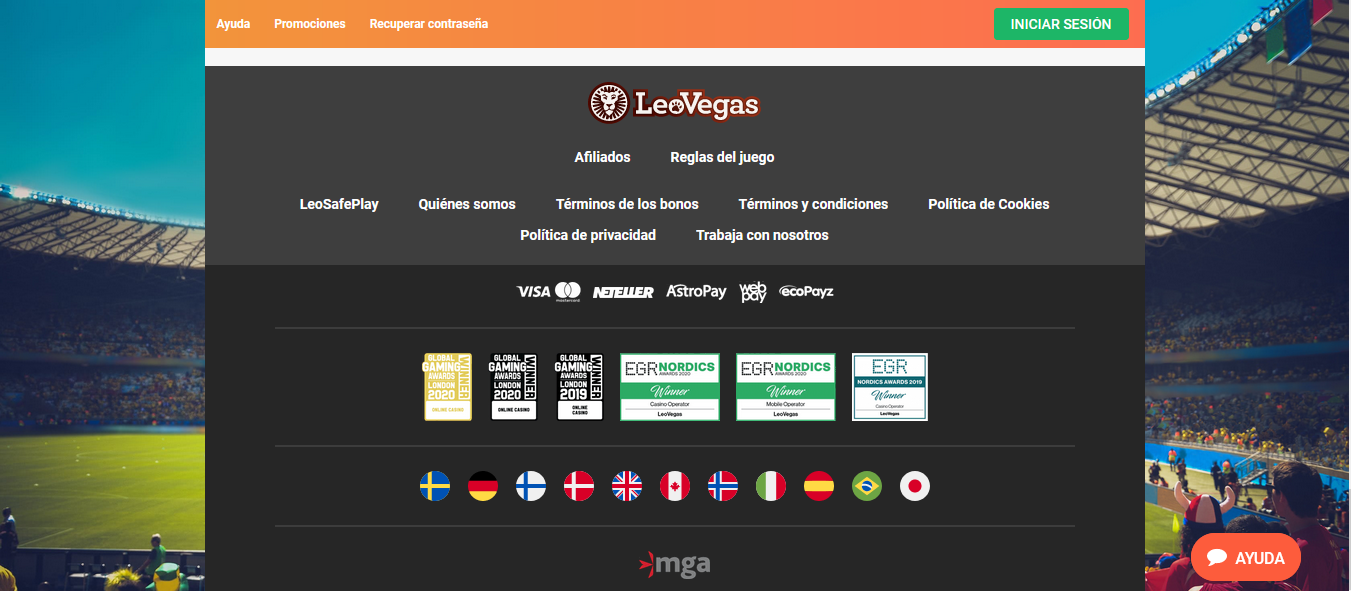
Reputation on its own cannot assure a deposit’s safety, but an extensive background of positive recognition from impartial industry bodies powerfully implies consistent performance. LeoVegas has won multiple «Online Casino of the Year» awards at the Global Gaming Awards and other respected ceremonies. Judges assess criteria that encompass payment processing, customer complaint resolution, and security infrastructure. The fact that LeoVegas has repeatedly placed ahead of competitors in these rigorous assessments implies that its financial handling meets and often exceeds market expectations. Canadian gaming forums and review sites consistently showcase the speed and reliability of Interac withdrawals, a practical benchmark that awards alone cannot capture. When a casino’s trophy shelf aligns with the daily experience of users in Edmonton, Halifax, and Montreal, it becomes simpler to believe that the deposit process has been engineered with genuine care rather than marketing polish. This consistency over time changes awards from mere trinkets into meaningful validation of secure financial operations.
The Canadian Users Should Know Regarding Domestic Banking Guidelines
While LeoVegas controls the security on its end, a transaction also sits within the framework of Canadian banking system. Understanding that crossroads provides another level of assurance. Canadian financial organizations handle transfers to authorized offshore gaming venues as standard international transactions, which means they are protected by the same fraud monitoring systems that identify suspicious activity on any additional transaction. If a transaction looks suspicious, the bank’s automated protections can trigger confirmation, offering an extra safeguard that functions separately of the casino. Players also enjoy the Canadian Code of Practice for Consumer Debit Card Services, which offers certain guarantees in the occurrence of illegitimate activity, though these differ by institution. The most important thing for payment protection is that no federal legislation prevents an individual in Canada from funding an profile on a platform like LeoVegas. Gamblers are not infringing any regulation by depositing, so there is no underlying legal threat that could abruptly block their funds due to jurisdiction issues.
Currency Handling and Conversion Rates
LeoVegas permits deposits in Canadian dollars, which constitutes a quiet but effective safety feature. When a casino requires currency conversion, each deposit and withdrawal gets clipped by exchange rate margins and potential intermediary bank fees, slowly diminishing the player’s bankroll outside of any wagering activity. By transacting directly in CAD with no forced conversion between deposit and play, LeoVegas eliminates that silent drain. The unified CAD currency wallet guarantees that $100 deposited is exactly $100 available for betting, with the same figure eventually withdrawn if no bets are placed. For strictly managing a gambling budget, this transparency is a form of safety. It eliminates hidden costs that could startle a player reviewing their bank statement weeks later. Understanding this detail enables Canadian users understand how the operator’s infrastructure conforms with local financial realities, turning a potential friction point into a smooth experience.
State Regulations vs. Offshore Sites
Canada’s approach to internet betting has changed in past years, with Ontario launching a licensed online gambling market. LeoVegas is not currently licensed by the Alcohol and Gaming Commission of Ontario, and it functions as an offshore site for players in that province. This nuance plays a role for payment protection awareness. Licensed Ontario platforms offer dispute resolution through the AGCO, a regional backstop that an foreign site cannot offer. However, LeoVegas balances with its MGA and UKGC licences, which require their own official complaints procedures and third-party adjudication. Outside Ontario, local monopolies like PlayNow in British Columbia and Espacejeux in Quebec are present, yet many residents still select international sites for their selection of games and bonus systems. Making deposits at an international site like LeoVegas is lawful for the player in these provinces, and the security of those deposits relies on the international regulatory frameworks described earlier. Recognizing this scenario allows each Canadian to make a fully informed choice, knowing clearly which protections are in effect and which do not.
How to Spot a Authentic LeoVegas Website and Avoid Phishing Scams
The last component of deposit safety includes human vigilance against impersonation. A proper LeoVegas casino page will always present a valid SSL certificate, apparent as a padlock icon in the browser address bar on both desktop and mobile. The deposit page itself should reside on a domain clearly controlled by the brand, not a misspelled or lookalike URL. Real LeoVegas apps are provided through the official website or trusted app stores, never through random APK downloads. Phishing attempts often come via unsolicited email or SMS, offering no-deposit bonuses and requesting immediate login. These messages are designed to harvest credentials and drain accounts. Canadian players are advised to access the casino only by typing the address directly into the browser or using a securely saved bookmark. The platform will never ask for full banking passwords or PINs during a deposit. Any such request is a definitive red flag. By merging LeoVegas’s own solid systems with basic digital hygiene, the act of depositing becomes as common and safe as any other trusted online transaction in a household’s monthly cycle.